

What 30 years of Affluence data reveal about the best time of year to invest.
One of the most frequent questions investors ask is whether there is a “best” time of year to invest. Conventional wisdom says no. Markets are difficult to predict, and investors are generally better off focusing on long-term fundamentals rather than trying to time short term market movements. We largely agree with that view. However, it doesn’t mean seasonal patterns don’t exist.
Recently, we analysed the monthly return history of the Affluence Investment Fund, Affluence LIC Fund and Affluence Small Company Fund. Each fund has at least a 10 year track record. Together, these funds provide almost 30 years of monthly return observations across a broad range of underlying asset classes, including Australian and global shares, listed investment companies, property, fixed income and alternative investments.
The results were surprisingly consistent.
Key findings
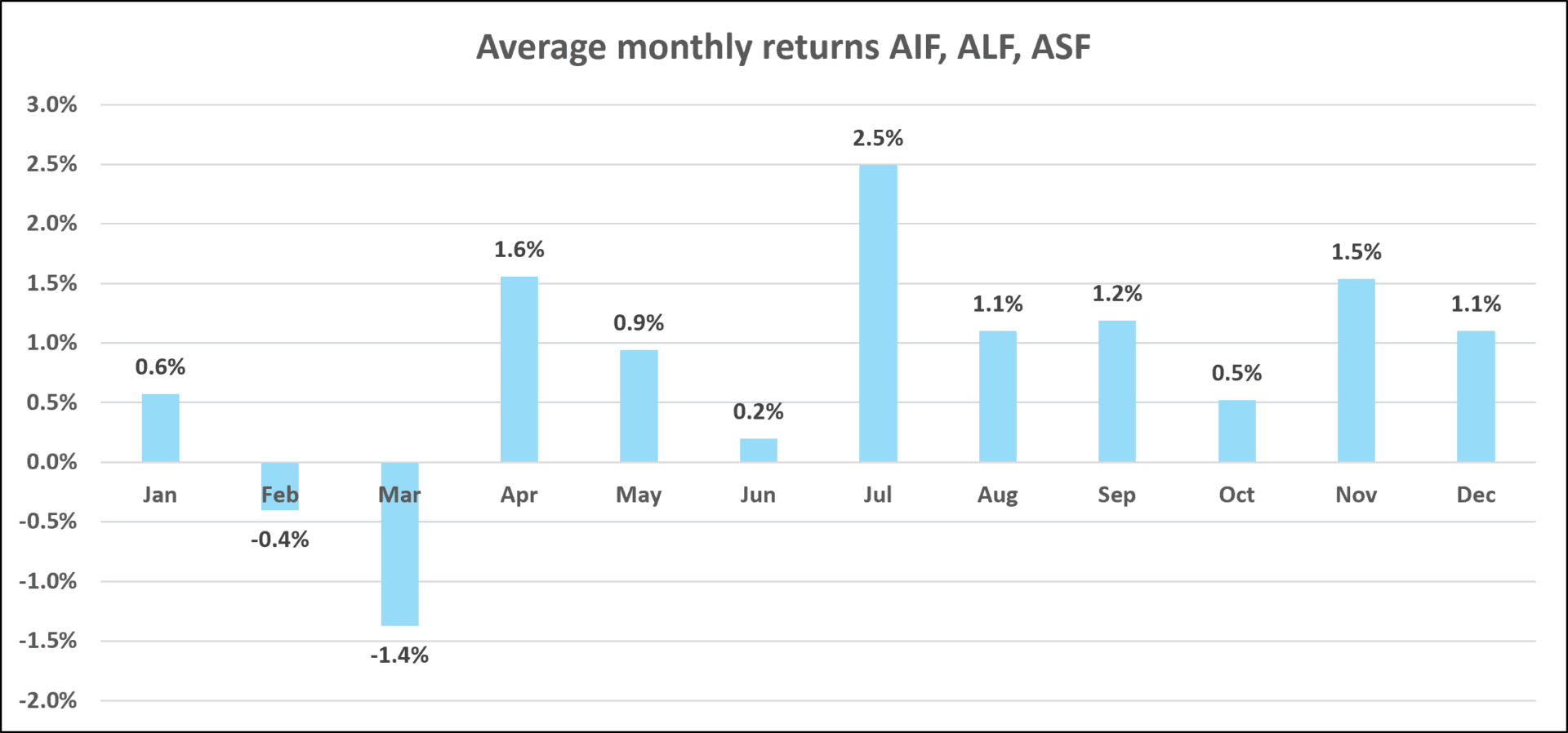
Here is the average return by month across all three funds:
There were some distinct patterns in the data:
- July was the strongest month for all three funds, with an average return of 2.5%.
- Other consistently strong months were April, November and September.
- The first quarter was the weakest, with average returns slightly negative overall.
- March was by far the weakest month overall, -1.4% on average.
- The gap between the strongest month (July) and weakest month (March) was 3.9%.
July’s average return was approximately three times higher than the average month across the dataset and 0.9% better than the next best month.
There is one feature of the data worth highlighting. The poor March result was driven largely by one event, the COVID market crash of March 2020. This has probably unfairly skewed March returns. If we remove March 2020 from the data, average March returns improve from -1.4% to -0.4%, which is similar to February. It still means that the first quarter of the year, for Affluence funds at least, has been slightly negative on average.
Why was July the standout month?
As we’ve seen, across the three Affluence funds July produced the highest average return of any calendar month. Even more interestingly, July wasn’t simply boosted by one or two exceptional years. It also recorded the highest proportion of positive returns, with more than 90% of observations finishing the month higher.
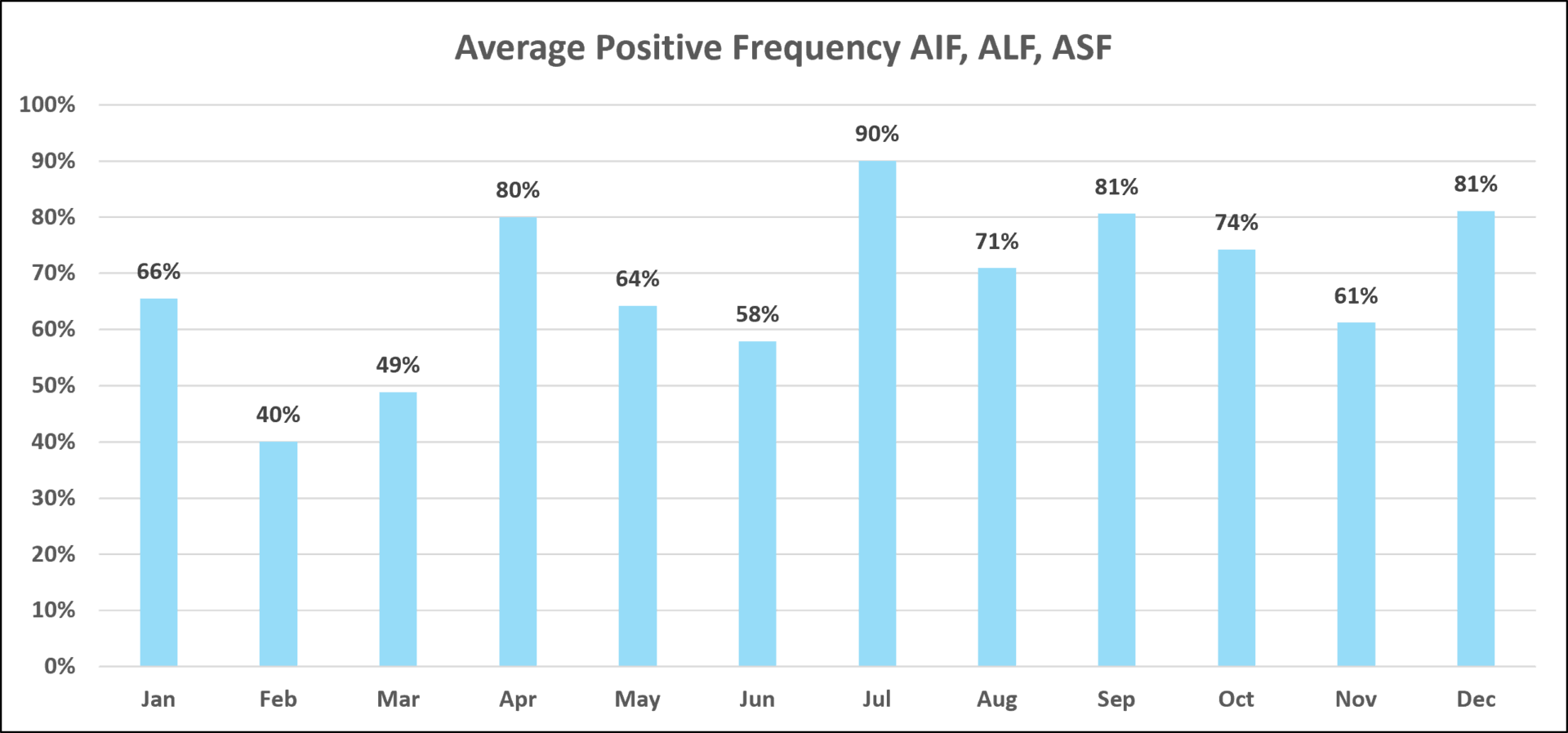
When a month ranks highly on both average return and consistency, it suggests there may be a genuine behavioural explanation. We believe the most likely explanation is tax loss selling.
As the end of the financial year approaches, many investors review their portfolios and look for opportunities to reduce tax liabilities. One common strategy is to sell investments that have fallen in value and use those realised losses to offset capital gains elsewhere. This process has little to do with the underlying quality of the investment being sold. Instead, it is driven solely by taxation considerations.
When large numbers of investors sell the same underperforming securities in May and June, prices can come under pressure. This effect is often most noticeable in areas such as smaller companies, LICs trading at discounts to NTA and less liquid investments. These are many of the areas where Affluence regularly finds opportunities.
Once 30 June passes, that selling pressure disappears. Investors begin reinvesting proceeds. Advisers rebalance portfolios, new superannuation contributions enter the system and professional investors position portfolios for the new financial year. The result is often a July rebound in prices.
This phenomenon has been observed in markets around the world for decades. Our own fund data and experience suggest it is also influencing returns within our portfolios.
What About “Sell in May”?
“Sell in May, go away, and come back on St. Leger’s Day”.
One of the oldest sayings in investing is “Sell in May, go away, and come back on St. Leger’s Day”.
The theory suggests investors should avoid markets during the middle part of the year and return later (St Leger’s Day is normally around mid September). Interestingly, our data provides little support for that idea. May has historically generated positive average returns for Affluence funds. June has as well, though less so. In fact, 50% of average annual returns for our funds were delivered in the 4 months from May to August, the period when investors supposedly should have been sitting on the sidelines. So, at least for Affluence funds, selling in May and going away has not historically been a good strategy.
Simple investing rules often have exceptions. And the best investment decisions are usually based on valuations, fundamentals and risk management rather than catchy sayings. In fact, having Affluence funds in your portfolio during a time of the year when traditional markets tend to struggle a bit could be helpful for your overall portfolio performance.
The Bottom Line
After analysing nearly 30 years of combined Affluence fund returns, one result stood out clearly. July has historically been the strongest month of the year. Of course, investors should not use this information as a market timing tool. There is no guarantee that these patterns will persist. However, understanding why these patterns occur can provide valuable insights into investor behaviour and market dynamics. And it seems clear to us that tax loss selling plays a role in the timing of fund returns.
Economics textbooks often assume investors behave rationally. But investors are influenced by tax considerations, emotions, fund flows, career pressures, headlines and short-term performance. These can create temporary mispricing. Nothing fundamentally changes about a company between 30 June and 1 July. Yet in Australia, investor behaviour changes dramatically. Prices can move meaningfully. For patient investors, these periods can create opportunities.
At Affluence, we spend a great deal of time searching for situations where market prices differ from underlying value. Tax loss selling, temporary liquidity pressures and changes in investor sentiment can all contribute to those opportunities.