
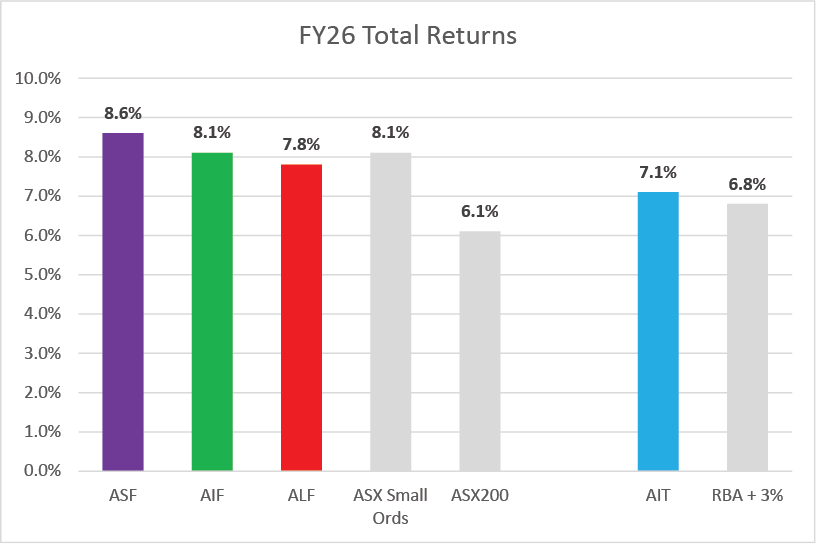
Our returns for the 2026 financial year are shown below. All funds outperformed the ASX200 Accumulation Index after fees and costs.
Distributions for the year ranged from 6.1% to 7.2%, with the Affluence Investment Fund, Affluence LIC Fund and Affluence Small Company Fund declaring higher than normal distributions for June (paid 10 July). The balance of returns came from increases in fund unit prices.
More details are in our monthly fund reports and our Annual Investor Letter, which you can access below.
Year-end investment and tax reporting is underway. We expect to send out all statements by the end of August. You can keep up to date with our progress on the 2026 Financial Year Information post on our website.
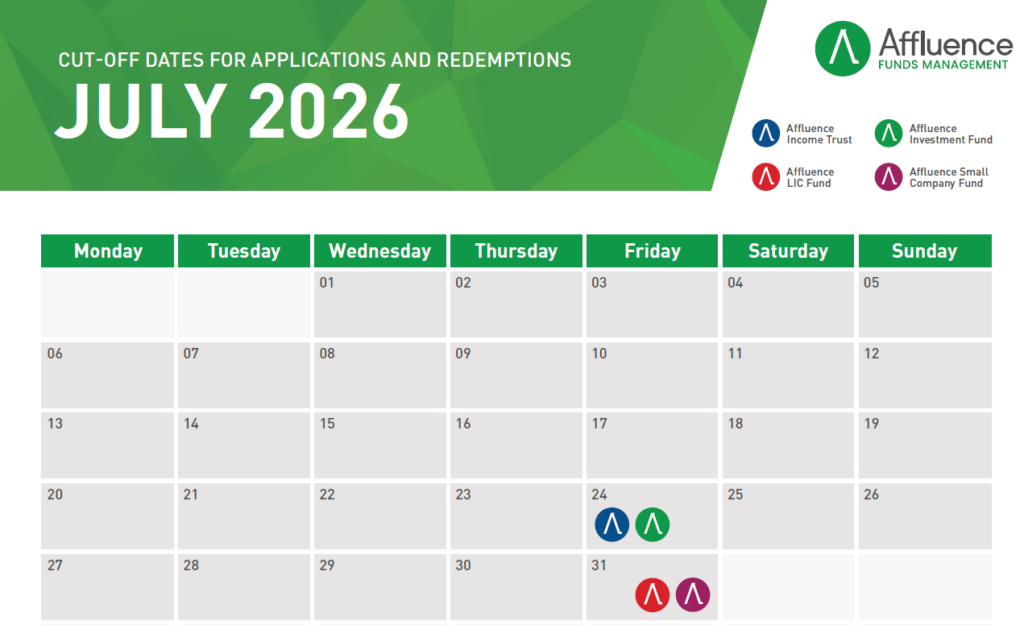
Should you wish to invest in any of our funds this month, head to the Invest Now page on our website to apply online or download paper forms. See below for the calendar of cut-off dates for this month. Applications received by the cut-off dates will be effective from 1 August.
In other news this month, Livewire Markets asked us to once again cast our eye over the debt listed investment trusts, and how they have performed over the past year. Our verdict is below. They also named the Affluence Income Trust as a top 3 performing fund in its category for the 2026 financial year. We’ve also included some fascinating insights form the AI Futures Project on how they expect AI to develop between now and 2040.
As always, thanks for reading. If you have any questions or feedback, reply to this email or give us a call.
Regards,
Daryl, Greg and the Affluence Team.
Affluence Funds Returns
Affluence Income Trust
The Affluence Income Trust returned 0.6% in June and 7.5% per annum since commencing. The current distribution rate is 7.35% per annum paid monthly.
Affluence Investment Fund
The Affluence Investment Fund returned -0.8% in June and 7.8% per annum since commencing. This diversified fund brings together our best ideas across all asset classes.
Affluence LIC Fund
The Affluence LIC Fund returned -1.5% in June and 10.3% per annum since commencing. At the end of the month, the average portfolio NTA discount was around 29%.
Affluence Small Company Fund
The Affluence Small Company Fund returned -0.2% in May and 9.1% per annum since commencing. There’s still exceptional value in many smaller companies.
Annual Investor Letter
In our review of the 2026 Financial Year, we look at what happened in investment markets, how our Funds performed, how they’re positioned for the road ahead and where we think the opportunities are.
Application and Withdrawals
To make a new investment, add to your existing investment or arrange a withdrawal from any of our Funds, head to our Invest page. There you can apply online or download paper forms.
Cut-off dates for July 2026 Applications and Withdrawals this month are shown below.
Reviewing Performance of Debt LITs
Last year, Livewire Markets asked us to take a look at whether the debt focused listed investment trusts had delivered on their promises. Our conclusion was that they mostly had, but that the biggest challenge was the potential for share price fluctuations, which can materially impact total returns.
A lot has happened since we published that article, and we thought now was a good time to check in again. Here’s our latest review of the last year’s performance from the LIT cohort.
Affluence Income Trust named as top 3 Fund
Sticking with Livewire Markets, they recently reviewed performance of fixed income funds for FY26, using data from their Funds menu. The Affluence Income Trust was named as a top performing fund in the Unconstrained Fixed Income category.
Fund In Focus
Affluence Income Trust
Are you looking for an investment option that targets decent, regular income, but without the risk associated with stock markets? Our Affluence Income Trust might be worth a look.
The Fund aims to provide you with:
- A minimum distribution equal to the RBA Cash Rate plus 3% per annum, paid monthly.
- Preservation of capital over rolling 3 year periods after payment of distributions.
- Access to a highly diversified portfolio of fixed income assets, with a focus on maximising returns with low volatility.
The current distribution rate is 7.35% per annum. Returns since inception have averaged 7.5% per annum*.
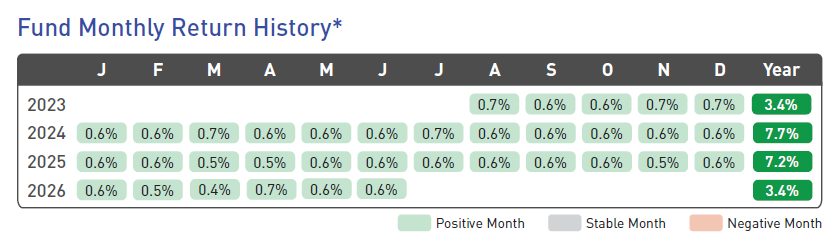
The Affluence Income Trust invests in a highly diversified fixed income portfolio, with a focus on maximising returns with low volatility. The Fund has a flexible investment mandate. This allows us to take advantage of what we believe to be the best risk adjusted investment opportunities within the fixed income asset class at any given time.
We aim for the portfolio to be diversified within the fixed income asset class by sub-sector, underlying manager, investment strategy, credit risk, liquidity, and investment structure.
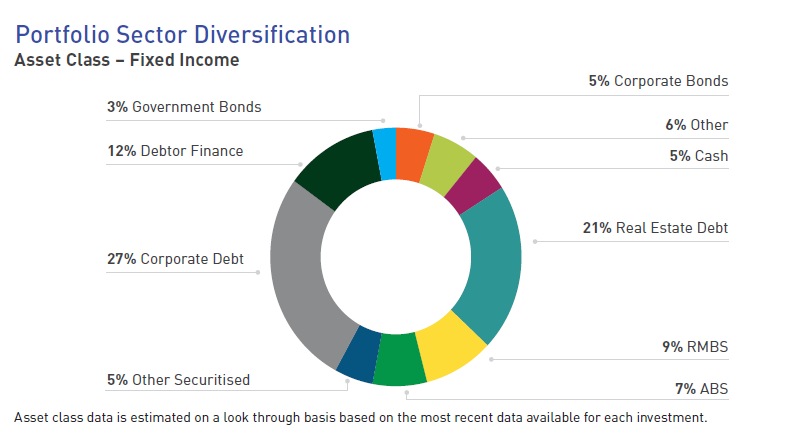
The Fund is designed for use as up to a Core Component of an investment portfolio for those investors seeking Income and Capital Preservation with a one year or longer investment timeframe, a Low risk/return profile and needing access to capital Monthly or less often.
You can learn more about the Fund from the Fund Page on our website which you can access by clicking below.
Let us know if you would like us to call you to discuss the Fund in more detail.
Things we found interesting
AI 2040: Plan A
The AI Futures Project, a small US nonprofit focused on forecasting the development of advanced artificial intelligence, have just released their recommendation for how AI should be handled. It’s titled AI 2040: The least bad plan we currently know of. Plan A is not their prediction of what will happen. It is their proposed “least bad” plan for what governments should try to make happen. The forecast assumes (based on their extensive research) that AI systems develop capabilities close to the best human minds around 2030, potentially triggering a rapid jump to superintelligence. Below, they set out the potential paths for AI. They say we must choose by 2029.
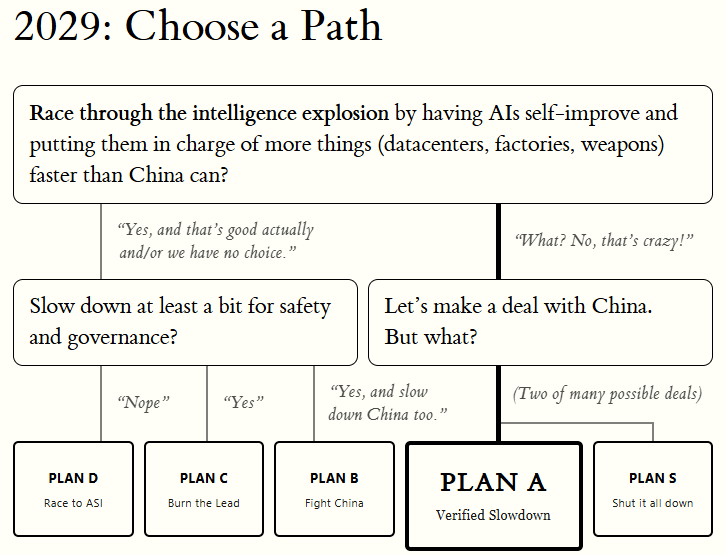
Under Plan A, the US and China reach a verifiable agreement to slow development, introduce extensive transparency around frontier AI research and prevent secret projects, using controls over computing infrastructure. AI would continue improving, but would pause around the capability of the best human experts before progressing to superintelligence in 2040, once governments believed it could be done more safely.
Even under their preferred strategy, the AI Futures Project believe over 90% of all human job output will be replaced by computers or robots by 2035, and from then on, we’ll all be receiving some form of “Citizen’s Dividend” from the Government, replacing income from jobs.
The people behind the AI Futures Project include former OpenAI governance researcher Daniel Kokotajlo, forecasting specialists Eli Lifland and Thomas Larsen, computer hardware researcher Romeo Dean, and contributors including Ryan Greenblatt and Brendan Halstead. Their backgrounds are heavily concentrated in AI forecasting, safety, governance, computing capacity and public policy rather than commercial AI development.
Their website at https://ai-2040.com/ contains the full year by year scenario, details of each plan and a whole bunch of other stuff. The most important qualification is that the authors consider Plan A unlikely. Their individual estimates put its probability at only 3-15%. Their most likely named outcome is Plan D, (the path we are currently on) in which competing AI companies and nations continue racing toward advanced AI with only limited slowing for safety.
Chart of the Month
South Korea’s sharemarket has experienced one of the most extraordinary investment booms in recent times.
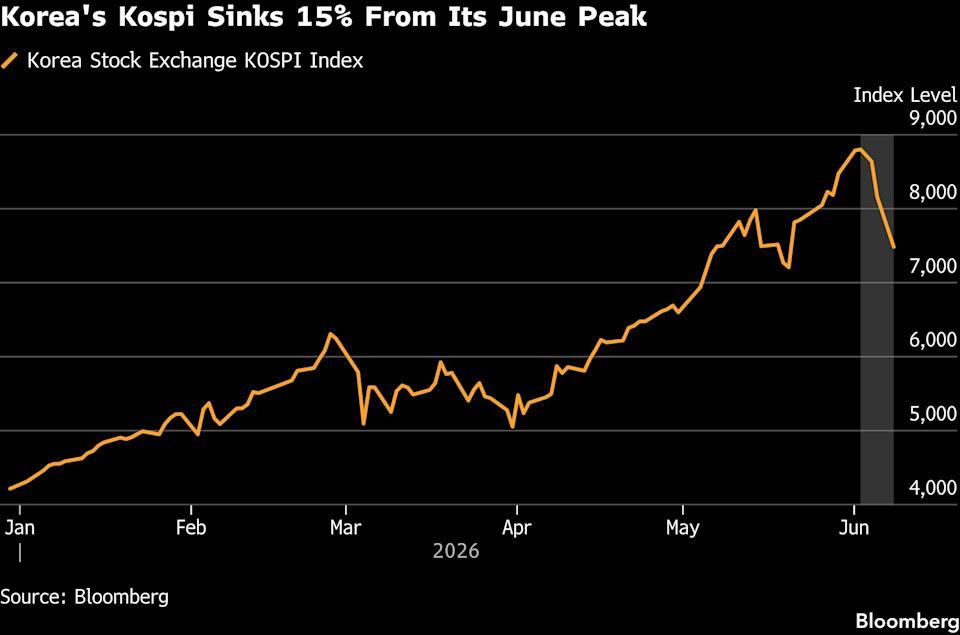
After gaining around 75% in 2025, the benchmark KOSPI Index surged another 75% by early May 2026 and ultimately reached a record high in June this year. By 16 July, it had fallen around 27% from its peak, although it remained more than 60% higher for the year.
The rally was overwhelmingly driven by semiconductor stocks, particularly Samsung Electronics and SK Hynix, which together accounted for more than 50% of the index near the peak. Artificial intelligence data centres require enormous quantities of high bandwidth memory, or HBM, and these two stocks are major suppliers.
There is a fundamental earnings story behind the excitement. Chipmakers have redirected manufacturing capacity toward higher margin AI memory, and they’re making extraordinary margins due to insatiable demand from data centres and other users. But a legitimate investment theme became a speculative frenzy. Korean retail investors poured money into Samsung and SK Hynix, often through margin loans and newly launched single stock leveraged ETFs, designed to produce twice the daily movement of an individual stock. Foreign investors, meanwhile, became increasingly willing sellers.
When chip shares began falling, the leverage worked in reverse, forcing selling and magnifying the decline. Korean regulators have now halted new listings of single stock leveraged ETFs until market conditions stabilise and tripled the minimum account balance required for retail investors to trade them.
The biggest winners have been SK Hynix, Samsung, other memory producers and investors who owned them before the boom. The biggest losers are late-arriving retail investors, particularly those who borrowed money or bought leveraged products near the peak. Even after the correction, early investors may still be well ahead, while some recent buyers have suffered very large losses. For example, investors that bought a SK Hynix leveraged ETF near the peak are currently sitting on a 45% unrealised loss.
The consequences extend well beyond Korea. Memory is a significant input cost for phones, tablets and computers. Manufacturers must either absorb those costs, reduce product specifications or raise prices. It’s starting to bite here in Australia. Apple recently increased the starting price of its cheapest iPad from $599 to $749, a 25% rise. Apple said it had previously shielded customers from higher component costs but had reached the point where prices needed to increase. Memory inflation may not explain the entire rise, but it is a powerful example of how the AI infrastructure boom is starting to materially raise costs for ordinary technology consumers, which of course doesn’t help keep inflation in check.
Vaguely interesting facts.
Astound your friends with these morsels of knowledge:
- Cheetahs cannot roar.
- Corn always has an even number of rows.
- Your left lung is 10-15% smaller than your right.
- The shortest commercial international flight takes about 10 minutes.
- The first known customer complaint is preserved on a 3,775 year old clay tablet *
* The tablet is housed in the British Museum in London. The complaint was written in ancient Mesopotamia (now Iraq) around 1750BC. A customer named Nanni wrote to a copper merchant called Ea-nasir. Nanni was not happy. We know this because he went to all the trouble of carving his grievances into a tablet, and then baking it. He complained that the copper ingots supplied were of poor quality, that his servant had been treated disrespectfully, and that he’d had to travel to collect goods that were not worth the effort.
We don’t know if Nanni ever received a response to his complaint. However, archaeologists have uncovered many other tablets associated with Ea-nasir. Several contain complaints from other customers about disappointing business dealings. Whether Ea-nasir was genuinely dishonest, consistently unlucky, or simply a very good preserver of business records, we will never know.
Thanks for reading. If you enjoyed this newsletter, forward it to a friend. If you are that friend, you can subscribe below.
Let Us Help You Make Better Investment Decisions
Our monthly eNews includes Fund updates, investments ideas and other things we find interesting.
It’s the best way for us to keep in touch, and for you to get to know us better. And we believe it’s important that you understand how we invest before you consider putting your money to work with us. Subscribe here to get our best ideas delivered straight to your inbox.