

April saw a market bounce and positive returns from all of our funds:
- +0.7% for the Affluence Income Trust (+7.0% over 1 year).
- +1.6% for the Affluence Investment Fund (+11.1% over 1 year).
- +2.4% for the Affluence LIC Fund (+11.7% over 1 year).
- +0.8% for the Affluence Small Company Fund (+15.3% over 1 year).
More details are in our monthly fund reports, which you can access below.
The RBA raised rates again in April for the third time this year. In line with our target of a 3% premium above the cash rate, the distribution for the Affluence Income Trust has been increased to 7.35% per annum, effective from 1 May.
Our Affluence LIC Fund celebrated its tenth anniversary in April. The Fund has delivered total returns of 10.6% per annum and distributions averaging 7.5% per annum over 10 years. It has also outperformed the ASX200 Accumulation Index since inception, with significantly lower volatility and superior performance when markets fall.
It is pleasing to have delivered these strong results, considering the very different market dynamics for LICs now compared to ten years ago. For the first three years of the Fund’s history, the portfolio discount averaged 7%. For the last three years, the portfolio discount has averaged 24% and is currently around 27%. We don’t require discounts to normalise (reduce) to generate strong returns, as evidenced by our results to date. But if discounts do move back towards historical averages, this would create strong tailwinds for the Fund.
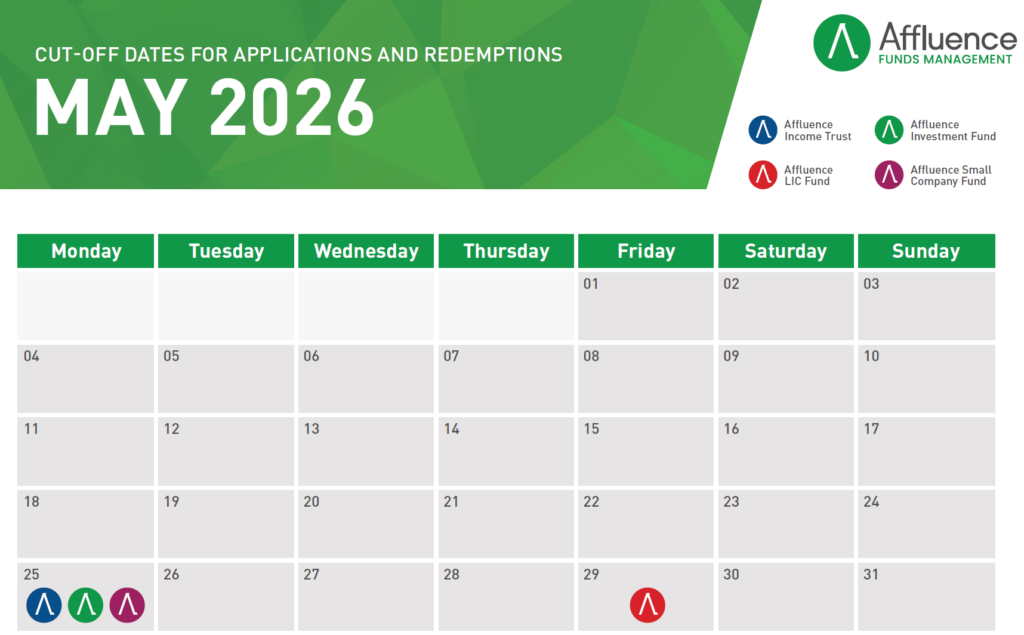
Should you wish to invest in any of our funds this month, head to the invest page to apply online or download paper forms. Applications received by the cut-off dates will be effective from 1 June.
As always, thanks for reading. If you have any questions or feedback, reply to this email or give us a call.
Regards,
Daryl, Greg and the Affluence Team.
Affluence Funds Returns
Affluence Income Trust
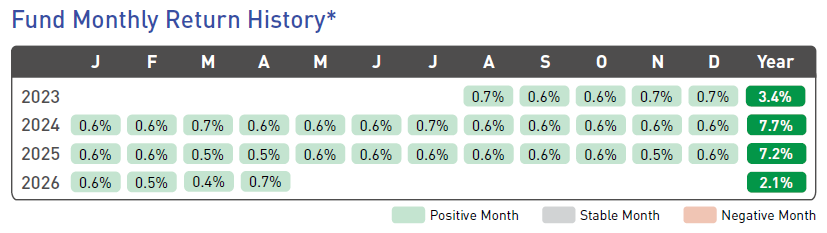
The Affluence Income Trust returned 0.7% in April and 7.5% per annum since commencing. The current distribution rate is 7.35% per annum paid monthly.
Affluence Investment Fund
The Affluence Investment Fund returned 1.6% in April and 7.9% per annum since commencing. This diversified fund brings together our best ideas across all asset classes.
Affluence LIC Fund
The Affluence LIC Fund returned 2.4% in April and 10.6% per annum since commencing ten years ago. At the end of the month, the average portfolio NTA discount was around 27%.
Affluence Small Company Fund
The Affluence Small Company Fund returned 0.8% in April and 9.2% per annum since commencing. There’s still exceptional value in many smaller companies.
Affluence Guide to LICs
Want to know how our Affluence LIC Fund has outperformed the ASX200 over the long term, even though average LIC discounts have expanded considerably? Our Affluence Guide to Listed Investment Companies has the answers. It outlines many of the strategies we use, including what we look for, and what we ignore.
By downloading the Guide, you can learn:
- How LICs work and how they generate returns.
- Key differences between LICs and other types of investments.
- How to use LICs to diversify your portfolio.
- The two key criteria we use to find the best LICs in Australia.
- The 5 most important things to consider when looking at LICs.
- Why size and liquidity matters – and the key advantage you have over big fund managers.
- Why you should never buy an LIC based solely on its dividend yield.
- How we measure LIC performance.
- How to buy the best LICs in Australia at the right price.
The Affluence Guide to Listed Investment Companies summarises the results of hundreds of hours of our work into less than 20 pages.
Application and Withdrawals
To make a new investment, add to your existing investment or arrange a withdrawal from any of our Funds, head to our Invest page. There you can apply online or download paper forms.
Cut-off dates for Applications and Withdrawals this month are shown below.
Fund In Focus
Affluence Income Trust
Are you looking for an investment option that targets decent, regular income, but without the risk associated with stock markets? Our Affluence Income Trust might be worth a look.
The Fund aims to provide you with:
- A minimum distribution equal to the RBA Cash Rate plus 3% per annum, paid monthly.
- Preservation of capital over rolling 3 year periods after payment of distributions.
- Access to a highly diversified portfolio of fixed income assets, with a focus on maximising returns with low volatility.
The current distribution rate is 7.35% per annum. Returns since inception have averaged 7.5% per annum*.
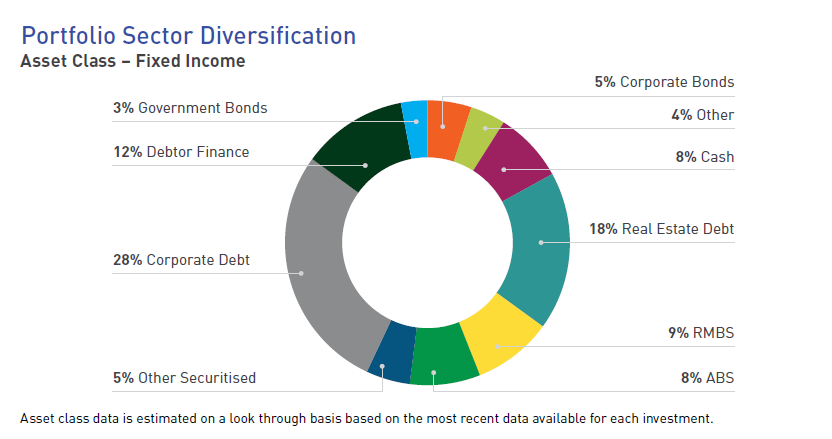
The Affluence Income Trust invests in a highly diversified fixed income portfolio, with a focus on maximising returns with low volatility. The Fund has a flexible investment mandate. This allows us to take advantage of what we believe to be the best risk adjusted investment opportunities within the fixed income asset class at any given time.
We aim for the portfolio to be diversified within the fixed income asset class by sub-sector, underlying manager, investment strategy, credit risk, liquidity, and investment structure.
The Fund is designed for use as up to a Core Component of an investment portfolio for those investors seeking Income and Capital Preservation with a one year or longer investment timeframe, a Low risk/return profile and needing access to capital Monthly or less often.
You can learn more about the Fund from the Fund Page on our website which you can access by clicking below.
Let us know if you would like us to call you to discuss the Fund in more detail.
Things we found interesting
Chart of the Month 1
Could you wait a quarter of a century?
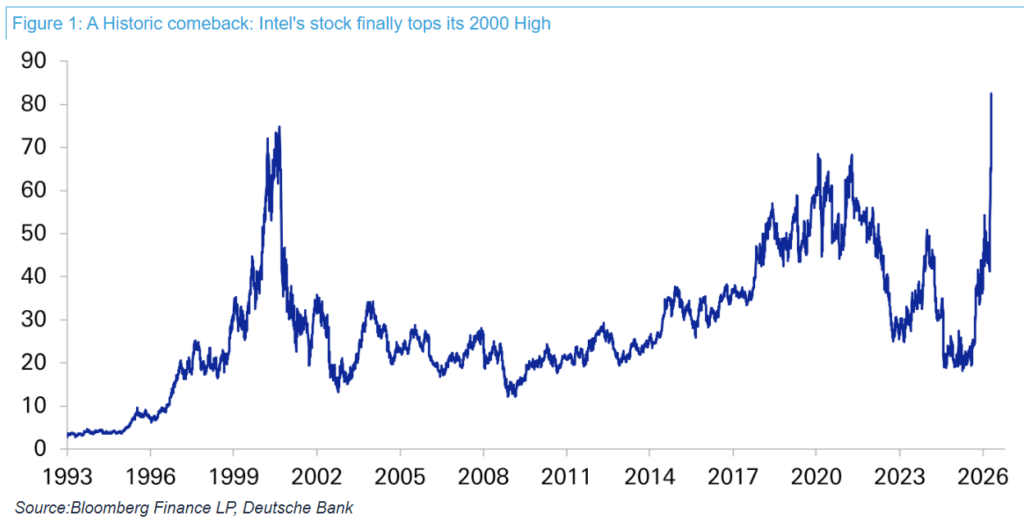
As highlighted above, courtesy of research from Deutsche Bank, shares of tech stock Intel have recently caught a bid. The stock is up around 400% over the past 12 months. This means the price has finally made new highs, eclipsing its dot-com bubble peak after 26 years.
The US federal government has benefited enormously, with its stake in Intel, acquired only last August, growing from $9 billion to around $36 billion.
It’s obviously been a wild ride, and recent investors have done incredibly well. However, the fact that it took 26 years to make new highs, during a period when the S&P 500 climbed approximately 370% (excluding dividends), highlights the perils of picking the wrong entry point in highly volatile sectors such as technology.
Imagine waiting a quarter of a century for your investment to break even, while the broader market delivered substantial returns. This raises the question of whether a similar fate could await some of today’s high-flyers? Any tech analyst would likely scoff at such a comparison, citing numerous differences. But Intel’s history serves as a powerful reminder of the inherent uncertainty in individual stocks, and the ability of a market to ignore investment fundamentals and just buy an exceptional story regardless of price. Intel was certainly no penny stock. At one point in the year 2000, it was the second largest stock in the world.
Chart of the month 2
Oil panic seems to have dissipated over the past month or so. This chart explains why, but also contains a warning.
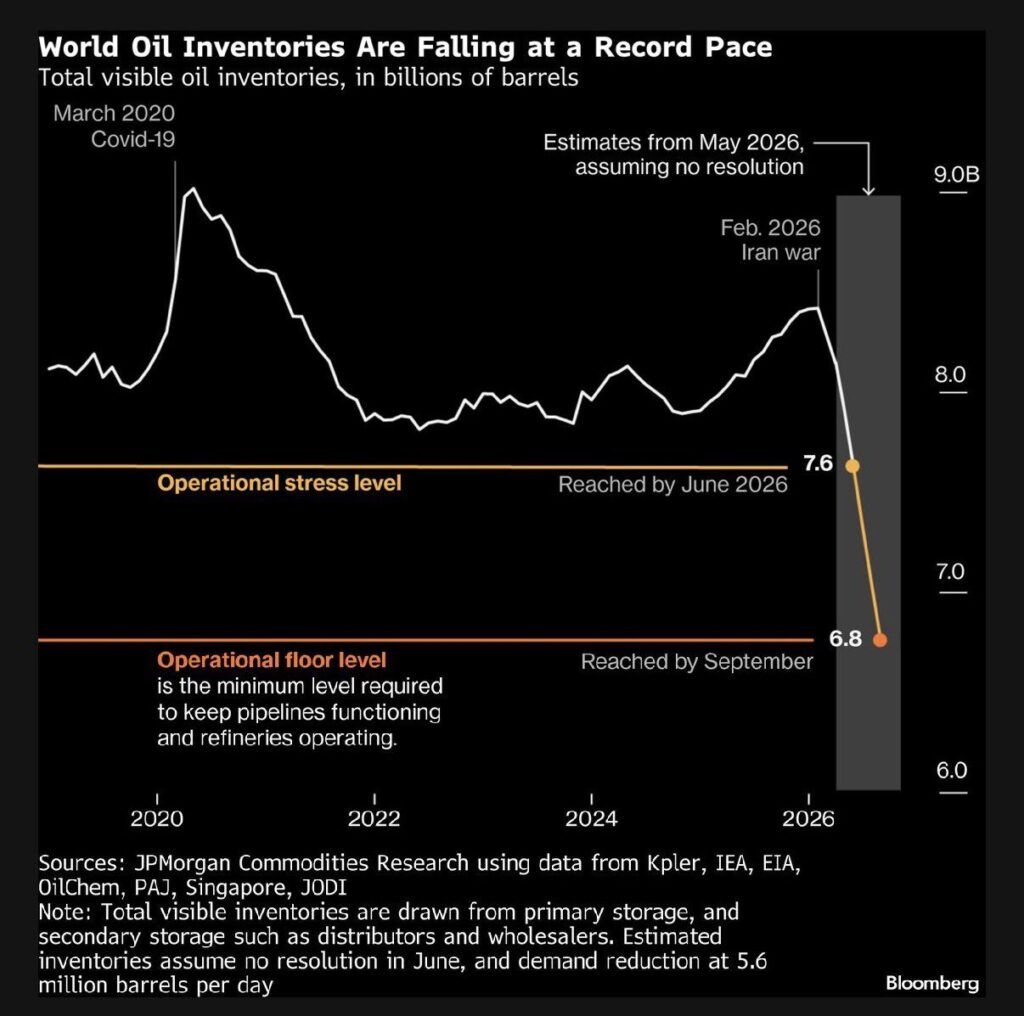
So far, oil supply has largely been maintained by drawing down inventories. That can continue for a while yet, but between June and September this year, assuming no resolution in the Middle East, we start to see these inventories running very low. At that point, things get tougher, and we must rely on demand destruction – economic speak for using less oil.
This is when more extreme price spikes and shortages would really start to be felt. Australia is unlikely to be the first country affected, but if we get to September with no resolution, our Level 4 National Fuel Security Plan restrictions might become a reality.
Vaguely interesting facts.
Astound your friends with these morsels of knowledge:
- The strongest muscle in your body (power to weight) is the masseter in the jaw.
- The Earth’s core is as hot as the surface of the sun (5,500°C).
- Mount Everest grows about 4mm higher every year.
- The Leaning Tower of Pisa took 199 years to build.
- There’s a museum of failed products in Sweden. *
* Most museums celebrate our greatest achievements. The Museum of Failure in Sweden does the exact opposite. Created in 2017 by Swedish psychologist Samuel West, the museum is dedicated to products and inventions that flopped spectacularly. Among the exhibits are:
- Banana Coca-Cola.
- Harley Davidson perfume.
- McDonalds Arch Deluxe (a luxury burger).
- Crystal Pepsi (clear cola).
- Colgate frozen meals.
- A Nokia phone shaped like a taco.
But the museum isn’t just there to mock bad ideas. The founder’s theory is that innovation and failure are related. Companies love to celebrate success stories. But almost every major breakthrough sits on top of a mountain of embarrassing experiments that didn’t work.
If you never fail, you probably aren’t trying anything interesting.
Thanks for reading. If you enjoyed this newsletter, forward it to a friend. If you are that friend, you can subscribe below.
Let Us Help You Make Better Investment Decisions
Our monthly eNews includes Fund updates, investments ideas and other things we find interesting.
It’s the best way for us to keep in touch, and for you to get to know us better. And we believe it’s important that you understand how we invest before you consider putting your money to work with us. Subscribe here to get our best ideas delivered straight to your inbox.